
Quick Answer: Match the anchor to the load. A snap-toggle anchor in drywall is manufacturer-rated for about 60 pounds of working load, while the plastic anchor sitting next to it in the aisle tops out around 10–25 pounds in real use — and for genuinely heavy items, find a stud. Pick wrong and it won’t fail next week; it fails at 2 AM, six months later.
Your wall is lying to you. That shelf feels rock-solid today, the mirror has not moved in months, and the little plastic anchor that came free in the packet is doing a heroic job — right up until the night it quietly gives up. Drywall failures never send a warning. They send a crash in the middle of the night, six months after you stopped worrying.
The fix is almost embarrassingly simple: pick the fastener by the weight it will actually carry, give leverage the respect it deserves, and learn the three-minute check that tells you when only a stud will do. Get those three things right once, and your walls stop gambling with gravity.
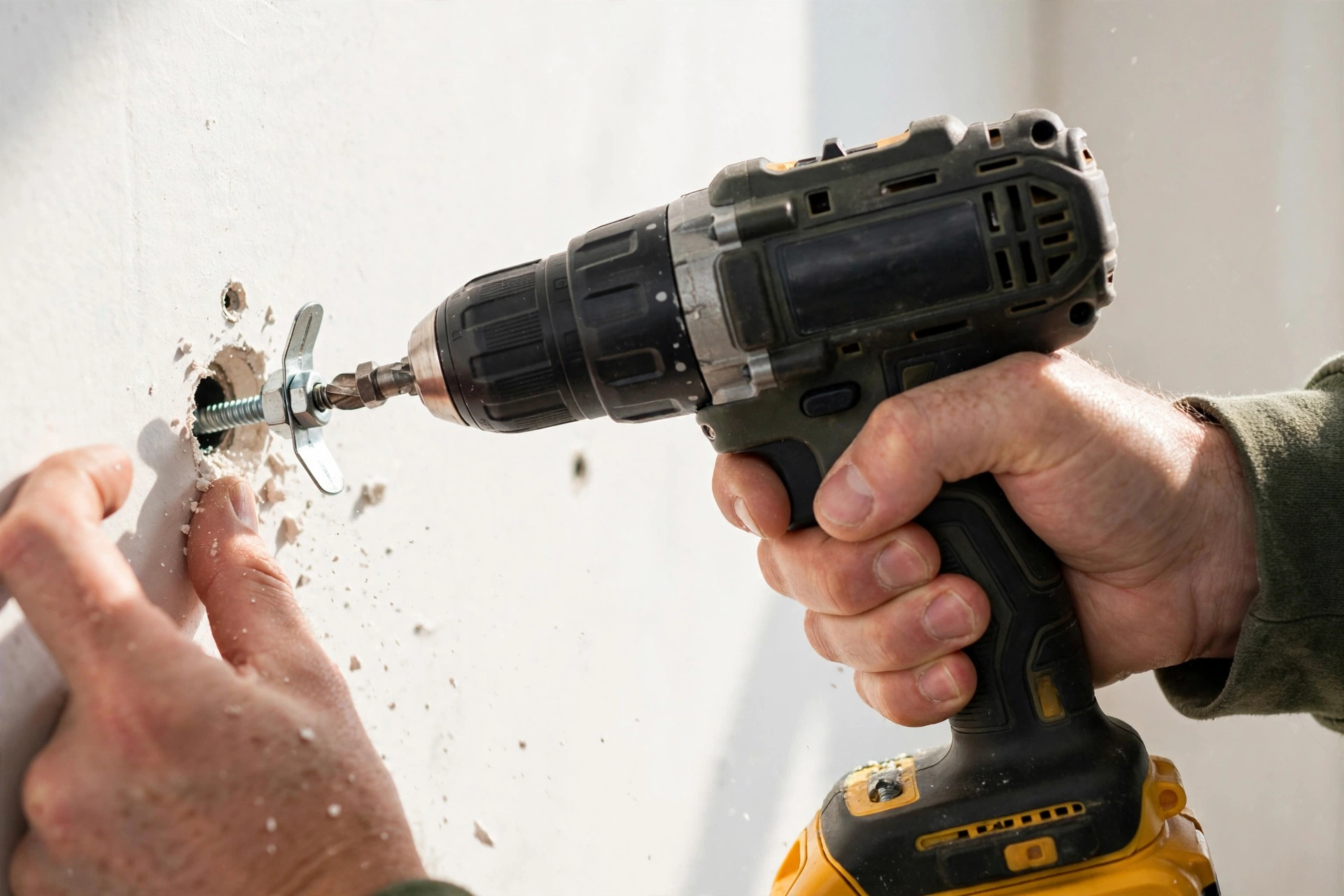
Safety first: Heavy items falling from walls injure people — a 50-pound mirror or TV is a genuine hazard. When in doubt, over-engineer: hit studs, use rated anchors, and respect weight limits. And before drilling, consider hidden wiring and plumbing — know what’s in your wall first.
Keep This Chart Handy — Hanging Methods Ranked by Strength
Screenshot this before the hardware store. Holding power is per fastener, in 1/2″ (12.7 mm) drywall, static load, properly installed.
| Method | Holding power | Metric | Best for |
|---|---|---|---|
| Small nail / picture hook | 5–10 lbs | 2.3–4.5 kg | Light frames, small decor |
| Monkey hook / Hercules hook | 15–35 lbs | 7–16 kg | Medium frames, clocks |
| Plastic expansion anchor | 10–25 lbs | 4.5–11 kg | Light shelves, small fixtures |
| Threaded drywall anchor (zinc) | 25–50 lbs | 11–23 kg | Medium shelves, curtain rods |
| Toggle bolt (spring wing) | 50–100+ lbs | 23–45+ kg | Heavy mirrors, large shelves |
| Snap-toggle / strap toggle | 60–80+ lbs* | 27–36+ kg | TVs, heavy cabinets, the serious stuff |
| Screw directly into stud | 100+ lbs per screw | 45+ kg per screw | Anything heavy — the gold standard |
*Working load = one-quarter of the manufacturer’s ultimate lab-test rating (TOGGLER SNAPTOGGLE data, 1/2″ / 12.7 mm drywall).
The rule that overrides everything: if the item is heavy (40+ lbs), valuable, or above someone’s head — hit the stud. Anchors are for when studs aren’t where you need them, not a replacement for them.
The methods, explained
Picture hooks and nails (light duty)
For anything under 10 lbs: a simple nail, angled slightly upward, or a picture hook. Don’t overthink it. The failure mode is almost always “used for something too heavy” — a 15-pound mirror on a picture hook rated for 10 is a slow-motion disaster.
Plastic expansion anchors (light-medium)
The most common and most misused anchor. You drill a pilot hole, tap in the plastic sleeve, and drive the screw — the screw expands the plastic against the drywall.
- Reality check: rated 25–50 lbs on the package, but real-world holding in 1/2″ drywall is closer to 10–25 lbs per anchor, and they loosen over time with any movement or vibration.
- Best for: light shelves, toilet paper holders, small curtain rods — static, light loads.
- Not for: anything that gets pulled, yanked, or vibrated (towel bars fail here constantly).
Threaded drywall anchors / screw-in anchors (medium)
The corkscrew-style zinc anchors that thread directly into drywall (no pilot hole needed for most). Significantly stronger than plastic — the threads grip a larger area of drywall.
- Holding: 25–50 lbs realistic per anchor in 1/2″ drywall.
- Best for: curtain rods, medium shelves, bathroom fixtures — the most common “real” household hanging jobs.
- Tip: drive them in straight — angled anchors create an oval hole that weakens the grip.
Toggle bolts (heavy duty)
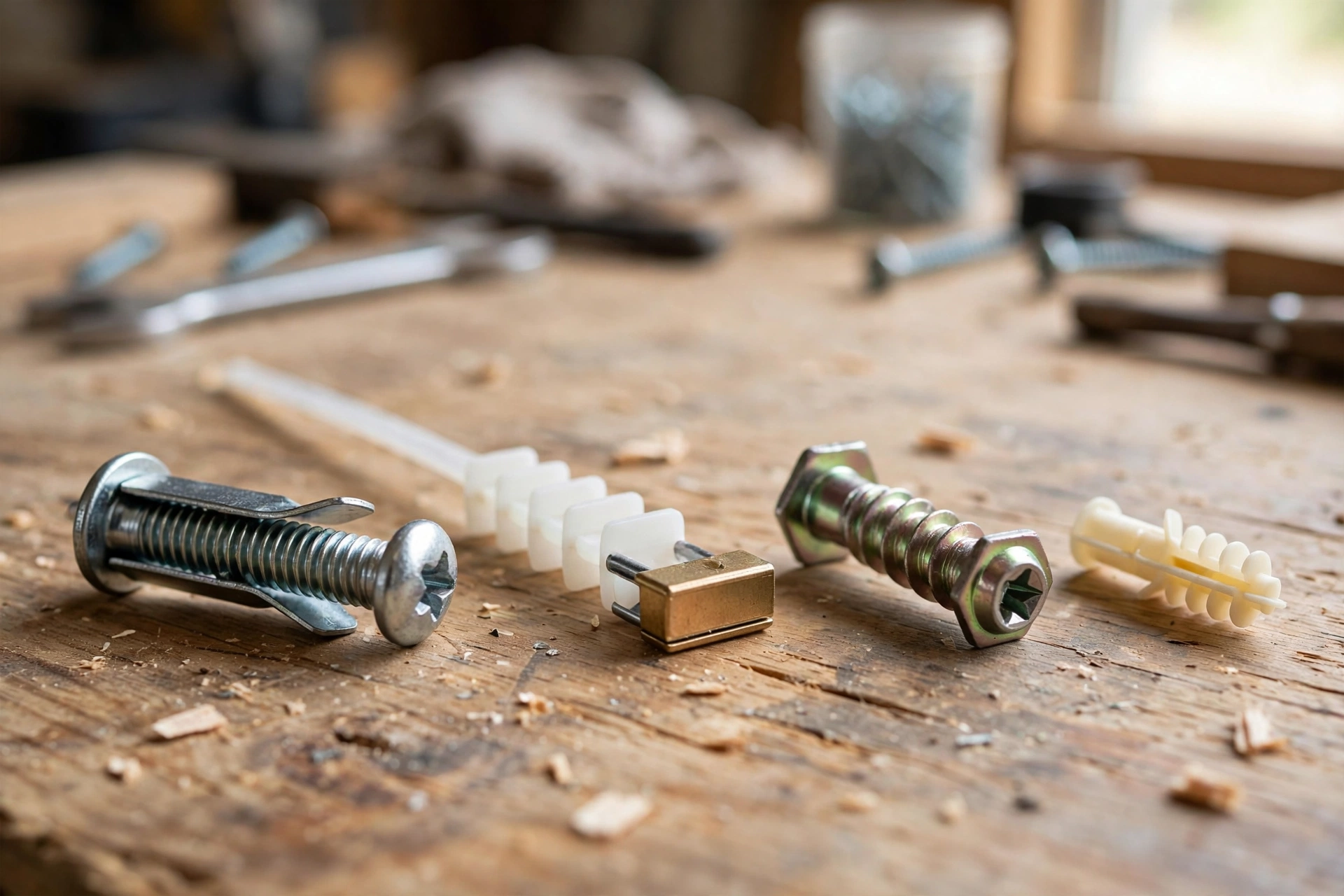
The classic heavy anchor: a spring-loaded wing that folds to pass through the hole, then opens behind the drywall, distributing the load across a wide area of the wall’s back face.
- Holding: 50–100+ lbs per anchor — the strongest option that doesn’t need a stud.
- The catch: requires a large hole (1/2″+), and once installed, removing the bolt means the wing falls behind the wall (it’s permanent until you cut it out).
- Best for: heavy mirrors, large shelving, anything where failure isn’t an option and there’s no stud.
Snap-toggles / strap toggles (heavy duty, removable)
The modern upgrade to the toggle bolt: a metal channel on plastic straps. Push through the hole, pull the straps to seat the channel, snap off the straps, drive the bolt. Stronger than wing toggles, smaller hole, and — critically — the bolt is removable and reusable (the channel stays).
- Holding: 60–80+ lbs working load per anchor in 1/2″ drywall. The strongest drywall-only option.
- Best for: TVs, heavy cabinets, grab bars — the jobs where you want maximum confidence without a stud.
Into the stud (the gold standard)
A #8 or #10 wood screw driven 1″+ into a stud holds 100+ lbs — per screw. Two screws into two studs holds more than any anchor system in drywall. It’s not even close.
- Always choose this for: TVs, heavy cabinets, bookshelves, anything over 40 lbs, anything above beds or seating.
- Find the stud properly: the trust-but-verify protocol — finder + nail test, every time.
The mistakes that pull things off walls
- Overloading plastic anchors. The #1 failure. A 30-pound shelf on two plastic anchors “rated” for 25 lbs each is living on borrowed time — real-world capacity is lower than package ratings, and dynamic loads (books added, shelf bumped) exceed static ratings.
- Not hitting the stud when one was available. People use anchors 3 inches from a perfectly good stud out of laziness. If a stud is within reach of your mounting points, use it.
- Anchors too close together. Drywall between two closely-spaced anchors is weakened — the failure zone overlaps. Space heavy anchors at least 6″ apart, preferably more.
- Ignoring the lever effect. A shelf bracket extends from the wall — the weight creates a rotational force (torque) that pulls the top anchor outward with multiplied force. A 20-pound shelf on 8″ brackets stresses the top fastener like 40+ pounds of direct pull. Heavy shelves need either studs or serious toggles, not plastic anchors.
- Hanging on the wrong wall. Drywall over concrete/block (common in basements and apartments) needs masonry anchors, not drywall anchors. Plaster walls need different technique than drywall. Know your wall.
Before You Drill — Keep This Checklist Handy
Run through this before every heavy hang — 60 seconds now beats a 2 AM crash later.
- Weigh the item first. Under 10 lbs: nail or picture hook. 10–25 lbs: threaded anchors. 50+ lbs, valuable, or above someone’s head: hit the stud — anchors are plan B, not the plan.
- Check for a stud within reach. If one is anywhere near your mounting points, use it — a #8 or #10 screw driven 1+ in into a stud holds 100+ lbs per screw. Verify with both a finder and a nail test, every time.
- Know what’s in the wall. Before drilling, consider hidden wiring and plumbing. Drywall over concrete or block needs masonry anchors, not drywall anchors; plaster needs different technique than drywall.
- Space heavy anchors at least 6 in apart. Drywall between closely-spaced anchors is weakened — the failure zones overlap.
- Respect the lever effect. A shelf bracket multiplies force at the top fastener — a 20-pound shelf on 8 in brackets stresses the top anchor like 40+ pounds of direct pull. Deep or heavy shelves need studs or serious toggles.
- Derate multi-anchor installs by 25%. Multiple anchors do not simply add up — load distribution is uneven.
- Life-safety rule: grab bars go into studs ONLY. No anchor substitutes when someone’s safety depends on it — if no stud is positioned right, open the wall and add blocking.
- Skip adhesive strips for anything heavy. They are for light frames under 10–15 lbs, and temperature and humidity degrade the adhesive over time.
Bookmark This Checklist — The Stay-Put Check After You Hang It
Run through this list once the item is on the wall — it catches the slow failures that do not show up on installation day.
- Every heavy anchor sits at least 6 in (15 cm) from its neighbour. Drywall between closely spaced anchors is weakened because the failure zones overlap.
- Multi-anchor loads are derated by 25%. Multiple anchors do not simply add up, because load distribution is uneven.
- Top fasteners on deep brackets get the lever-effect treatment. A 20-pound shelf on 8 in (20 cm) brackets stresses the top anchor like 40+ pounds of direct pull.
- Stud position is verified with both a finder and a nail test. That double check applies before any item over 40 lbs (18 kg), valuable, or above someone’s head goes up.
- Wall type is confirmed first. Drywall over concrete or block takes masonry anchors, and plaster takes a different technique than drywall.
- Grab bars mount into studs only. If no stud sits in the right place, open the wall and add blocking — no anchor substitutes for a life-safety device.
- Adhesive strips stay reserved for light frames under 10–15 lbs (4.5–7 kg). Adhesive is never the answer for heavy, valuable, or overhead items.
Special cases
Pick Your Fastener by the Job — Keep This Chart Handy
Stop choosing anchors by what is on sale. Find your job below, use the pick in the middle, and hang it once.
| What you are hanging | Pick | Why |
|---|---|---|
| Light frame — under 10 lbs (under 4.5 kg) | Small nail or picture hook | Rated 5–10 lbs (2.3–4.5 kg) per fastener — enough, and nothing more is needed |
| Medium frame or clock — 15–35 lbs (7–16 kg) | Monkey hook / Hercules hook | Rated 15–35 lbs (7–16 kg) per fastener |
| Light shelf — under 15 lbs (under 7 kg) loaded | Threaded drywall anchor (zinc) | Fine for light, static loads — but anything deeper than 8 in (20 cm) or heavier needs a stud (lever effect) |
| 50-lb (23 kg) mirror | Toggle bolts or snap-toggles — two minimum, properly spaced | Anchors are plan B for heavy items; if a stud is near your hanging points, use it instead |
| TV — 65 in, 50+ lbs (23+ kg) | Studs, always — two studs minimum | 50+ lbs of expensive leverage; snap-toggles are the backup plan, not the plan |
| Kitchen or bath cabinet | Studs, with long screws 2-1/2 in (64 mm)+ through the mounting rail | Cabinets hold dishes — the load is serious and permanent |
| Curtain rod (pulled daily) | Threaded zinc anchor or toggle | Constant pulling loosens plastic anchors over time |
| Bathroom grab bar | Studs ONLY — add blocking if no stud lines up | Life-safety device; a grab bar that pulls out during a fall is worse than no grab bar |
TVs: studs, always — two studs minimum for mounts, verified with the nail test. A 65″ TV is 50+ lbs of expensive leverage. Snap-toggles are the backup plan, not the plan.
Cabinets (kitchen/bath): into studs with long screws (2-1/2″+) through the cabinet’s mounting rail. Cabinets hold dishes — the load is serious and permanent. Every cabinet installer hits studs; so should you.
Curtain rods: the classic “medium” job — threaded anchors work, but the constant pulling (opening/closing curtains) loosens plastic anchors over time. Threaded zinc or toggles for anything you yank daily.
Grab bars (bathroom safety): studs ONLY. This is a life-safety device — a grab bar that pulls out during a fall is worse than no grab bar. If no stud is positioned correctly, open the wall and add blocking. No exceptions.
How much weight can drywall hold without a stud?
Per anchor: 10–25 lbs (plastic), 25–50 lbs (threaded), 50–100+ lbs (toggle), 60–80+ lbs (snap-toggle) — in 1/2″ drywall, static load, properly installed. Multiple anchors don’t simply add up (load distribution is uneven), so derate by 25% for multi-anchor installations.
Can I hang a 50-pound mirror with anchors?
Yes — with toggle bolts or snap-toggles (two minimum), properly spaced. But if a stud is anywhere near your hanging points, use it instead. Anchors are plan B for heavy items.
Why did my shelf fall down months after installation?
Creep failure: drywall slowly deforms under sustained load, especially with plastic anchors and any vibration or load cycling. The anchor that held in January lets go in June. Heavier-duty anchors (toggles) resist creep far better; studs don’t creep at all.
Do I need to find a stud for a small shelf?
For light shelves (under 15 lbs total loaded weight): quality threaded anchors are fine. For anything heavier or deeper than 8″ (lever effect): find the stud. The 3-minute verification protocol is always worth it.
What if there’s no stud where I need one?
Snap-toggles are the answer for heavy items — they’re the strongest stud-free option and the bolt is removable. For medium items, threaded anchors. And remember: you can always open a small drywall section, add wooden blocking between studs, patch it, and have a perfect anchor point exactly where you need it. It’s more work, but it’s the pro solution.
Are adhesive strips an option for heavy items?
No. Adhesive strips are for light frames and decor (under 10–15 lbs, and even then, temperature and humidity degrade the adhesive over time). Anything heavy, valuable, or above head height needs mechanical fastening.
The verdict
| Weight | Method |
|---|---|
| Under 10 lbs (under 4.5 kg) | Nail, picture hook, or adhesive strip |
| 10–25 lbs (4.5–11 kg) | Threaded drywall anchors |
| 25–50 lbs (11–23 kg) | Threaded anchors (multiple) or toggle bolts |
| 50+ lbs (23+ kg) | Studs — or snap-toggles if no stud available |
| TVs, cabinets, grab bars | Studs. Always. |
The hierarchy is simple: studs beat everything, snap-toggles are the best stud-free option, and plastic anchors are for light duty only. Match the method to the weight, verify your studs, respect the lever effect — and your walls will hold everything you hang for decades.
Tool Worth Lab provides research-based DIY guidance. For life-safety installations (grab bars), always mount to studs or add blocking — no anchor substitutes for structure when someone’s safety depends on it.
Keep Reading
Loved this guide? These related articles will keep your project moving: